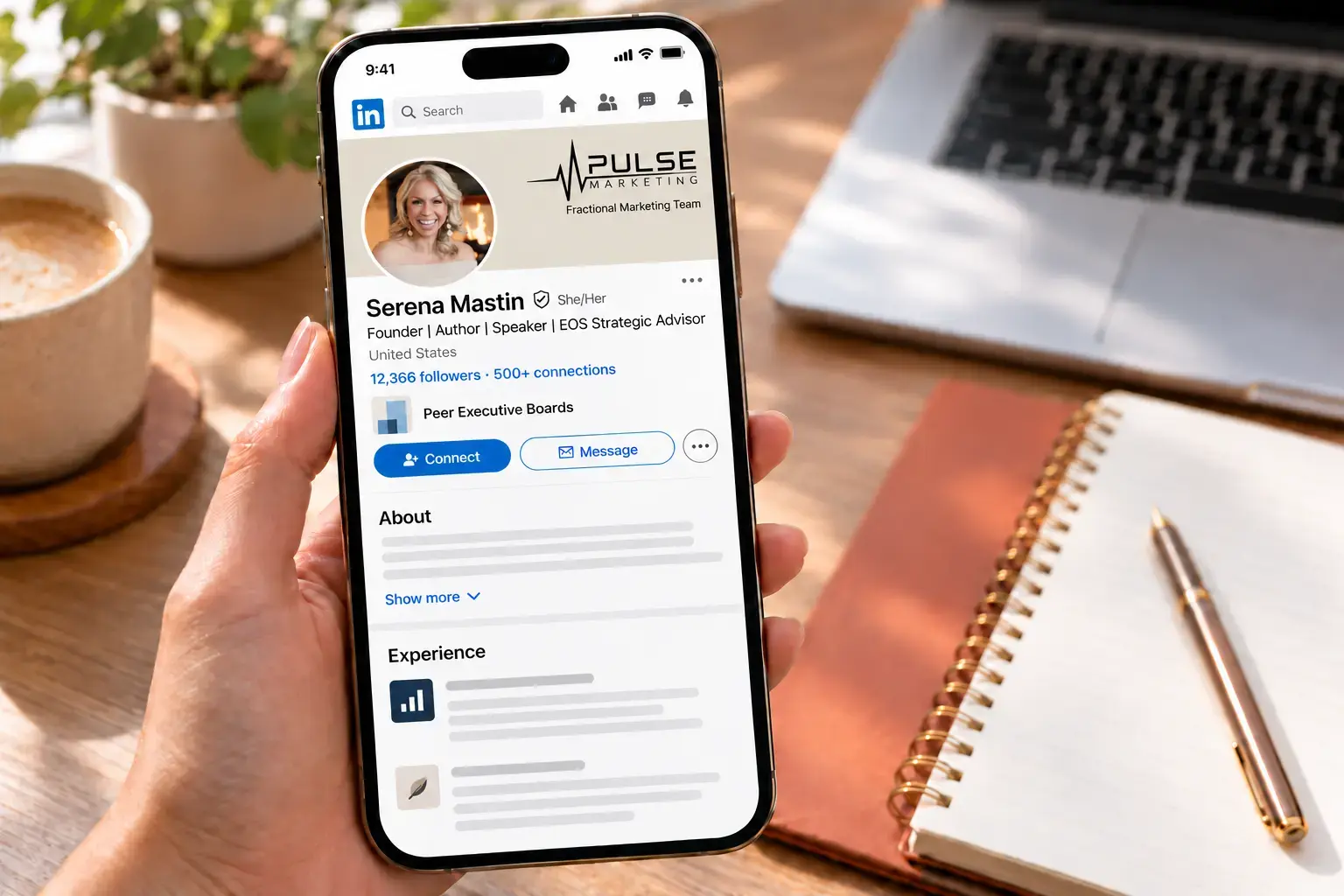
Your LinkedIn profile is more than an online résumé. For business owners, executives, sales professionals, and other professionals, it can be one of your most valuable tools for building credibility, generating connections, and creating new business opportunities.
But simply having a LinkedIn profile isn't enough.
If your profile is outdated, unclear, or written like a job application, you're probably leaving opportunities on the table. A strong LinkedIn presence should quickly communicate who you are, what you do, who you help, and why someone should want to connect with you.
Start With the First Impression
When someone discovers you on LinkedIn, they're likely to make a decision about your profile within seconds.
Your profile photo, headline, and About section are some of the first things they'll see.
That means your profile should immediately answer three questions:
- Who are you?
- What do you do?
- Why should I care?
Your headline is particularly important. Instead of simply writing, “President at ABC Company,” consider using the space to explain your expertise and the value you provide.
Example: Helping healthcare organizations turn complex marketing challenges into measurable growth | CEO | Healthcare Marketing Strategist
Your title can still be included, but now the headline gives people a reason to keep reading.
Write Your About Section for Your Audience
Your About section shouldn't read like a corporate biography. Think of it as your opportunity to start a conversation.
A strong LinkedIn About section can include:
- What you do and who you serve
- The problems you help solve
- Your experience and areas of expertise
- Accomplishments or credentials that establish credibility
- What makes your approach different
- A clear invitation to connect or start a conversation
Most importantly, write for your ideal audience.
If you're a consultant trying to attract business owners, your About section should speak to business owners. If you're a CEO looking to connect with other executives, your profile should make that clear.
Use LinkedIn Keywords Strategically
LinkedIn is a search engine as well as a social network. People search LinkedIn for professionals based on names, job titles, industries, services, skills, and areas of expertise.
Your profile should naturally include the terminology your ideal audience is likely to search for.
Consider incorporating relevant keywords into your:
- Headline
- About section
- Experience descriptions
- Skills
- Services section
Don't stuff your profile with keywords just for the sake of search visibility. The goal is to make your expertise easy to understand and easy to find.
Turn Your Experience Into Evidence
Your Experience section shouldn't simply repeat your job description. Instead of listing everything you were responsible for, focus on what you accomplished, changed, built, or helped others achieve.
Compare: Responsible for managing marketing campaigns and social media.
With: Developed integrated marketing campaigns that increased qualified leads and strengthened brand visibility across digital channels.
The second version gives someone a much better understanding of your capabilities. Whenever possible, use specific outcomes, accomplishments, awards, credentials, or examples that demonstrate your expertise.
Don't Forget the Rest of Your Profile
A polished LinkedIn profile goes beyond the headline and About section.
Take the time to thoughtfully complete your:
- Profile photo and background image
- Experience
- Education
- Skills
- Recommendations
- Certifications
- Featured section
- Services, when applicable
The Featured section is particularly useful for showcasing content you want visitors to see, such as articles, interviews, presentations, case studies, websites, or other examples of your work.
Your Profile Is Only the Beginning
Here's where many LinkedIn strategies fall short. You can spend hours creating a polished profile, but a great profile doesn't automatically generate conversations.
Your profile creates credibility. Your activity and outreach create opportunities.
That might mean regularly sharing useful content, engaging with other professionals, connecting with people in your target audience, or using strategic LinkedIn messaging to begin relevant conversations.
The key is to avoid treating LinkedIn messaging like mass email.
Effective LinkedIn outreach should be personal, relevant, and focused on starting a genuine conversation, rather than immediately pushing a product or service.
When your profile is optimized first, someone who receives your message can click through and immediately understand who you are, what you do, and why the conversation is relevant.
That's when LinkedIn becomes much more than a networking site. It becomes a business development tool.
Make Your LinkedIn Profile Work Harder for You
Your LinkedIn profile should work even when you're not actively networking.
It should establish credibility when someone searches for you, reinforce your expertise when someone receives your message, and make it easier for the right people to understand why they should connect with you.
At Pulse Marketing, we help professionals and business leaders optimize their LinkedIn presence and develop strategic LinkedIn messaging campaigns designed to start meaningful business conversations.
A better LinkedIn strategy starts with a better profile.
Frequently Asked Questions
What makes a good LinkedIn profile?
A good LinkedIn profile clearly communicates who you are, what you do, who you serve, and what makes you credible. It should include a professional photo, compelling headline, strong About section, relevant experience, keywords, skills, and supporting accomplishments.
How do I optimize my LinkedIn profile?
Start by identifying your target audience and the keywords they may use to find someone with your expertise. Then optimize your headline, About section, Experience section, Skills, and other profile sections around that audience and your professional value.
Does my LinkedIn headline really matter?
Yes. Your headline is one of the first things people see and can influence whether they click on your profile. Use it to communicate your expertise and value rather than relying solely on your job title.
How often should I update my LinkedIn profile?
Review your profile at least a few times a year and update it whenever your role, services, accomplishments, target audience, or professional focus changes.
Does LinkedIn messaging actually work for business development?
It can, when it's strategic and personalized. Effective LinkedIn messaging focuses on the recipient, provides a relevant reason to connect, and starts a conversation rather than immediately delivering a sales pitch.
Should I optimize my LinkedIn profile before starting a messaging campaign?
Absolutely. Anyone who receives your outreach may look at your profile before responding. An optimized profile gives your messaging greater credibility and creates a consistent experience from first message to potential conversation.